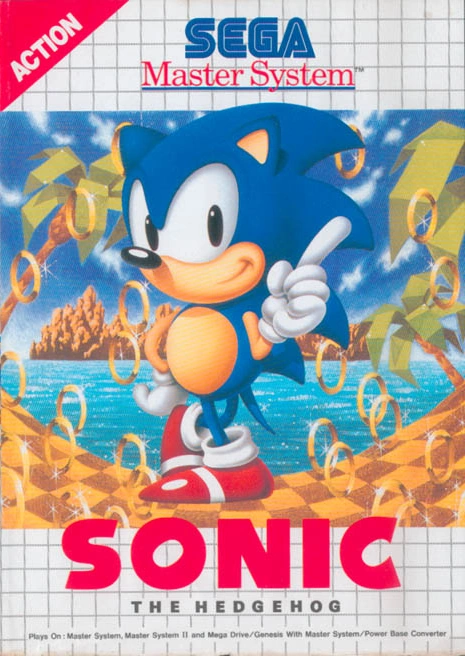
I’ve talked plenty about my love of the Sonic games over on the Retro Reaction blog. If you lived through the late 80s to early 90s, you already know the story. Sonic, Sega’s mascot, took on Nintendo’s plumber and — for a while, especially in the American market — the Hedgehog won.
Things weren’t quite as clear‑cut here in the UK. For starters, Sega’s 8‑bit Master System was more popular than Nintendo’s NES, and the Mega Drive outperformed the SNES.
But that’s only half the UK story. Home computers were a huge part of the market, with the main players being the ZX Spectrum and the Commodore 64. Later, the Amiga and Atari ST would bring 16‑bit home computing into the mix.
But it raises a question — especially now, when everything is multiplatform.
What if Sonic hadn’t been a Sega exclusive?
What if that game had appeared on other platforms back in the day, just as Sonic does now?
We don’t have to wonder anymore, because in this timeline Commodore 64 owners were loading up their tape drives and heading straight into Green Hill Zone.
In 2021, homebrew developer Mr Sid and team ported the Master System edition of Sonic the Hedgehog to the Commodore 64. The conversion works brilliantly. This isn’t a demo — it’s the full game, playable end‑to‑end, with only a few minor differences. (I noticed the screen doesn’t auto‑scroll during Bridge Zone.)
There is an asterisk, though. If you’re playing on real hardware, you’ll need the RAM Expansion Pack. Full disclosure: I’ve run this on both the C64 Mini and the popular Vice emulator. In both cases, it just required tweaking a setting to enable RAM expansion.
Hardware quirks aside, this is a great port. It raises a wonderful “what if…”
What if the Commodore 64 had received this back in the day?
Would it have boosted the Sonic brand?
Or would it have stopped people upgrading to consoles — whether 8‑bit or 16‑bit?
It would almost certainly have caused chaos in the school yard. Imagine the arguments over which computer was better if one of them came with a Sonic port.
And what if the ports hadn’t stopped at the C64?
Those homebrew geniuses are still at it. As I type this, Sonic is in development for the 16‑bit Amiga, and it looks just like its Mega Drive counterpart.