
-
Sonic is coming to Amiga
Back in the early 90s, computer game publisher U.S. Gold bought the home‑computer rights to produce Sonic the Hedgehog for Sega. Their press release promised the port would arrive on all those lovely home computers: Amiga, Atari, C64 and Spectrum.
Sadly, it never happened. Sega revoked the licence, and although the home computers had some great platformers—fast‑paced ones like Zool included—they never got to see the blue hedgehog. Or so we thought.
One of the best parts of owning an Amiga was the newsagent. Long before PlayStation and Xbox magazines strapped demo discs to their covers, you could head to your local shop and see titles like Amiga Power, Amiga Format, or Amiga Addict. There were probably more, and most came with a demo disk.
The disk contents varied. I always fell for those eye‑catching “software worth over £500 FREE with this magazine” claims. Almost always it was shareware. When it came to games, it was demos—the first few levels, a taster only.
But in this timeline, there’s a recognisable face on the magazine demo disk. In this version of events, Sonic the Hedgehog really did come to Amiga owners. Thanks to some very clever homebrew developers, the timelines have merged and the Amiga demo is real and playable.
You can actually watch the development of this port (and I have) on the Reassembler YouTube channel. This might be a case of good things coming to Amiga owners who wait. The old magazine screenshots of the U.S. Gold release looked more like the 8‑bit Sonic—the one recently ported to the C64. Reassembler has taken the code straight from the Sega original and… well, reassembled it for the Amiga.
His whole process is documented in those YouTube updates, and it’s a great look into the technical side of things. The demo has been released. The full game is being worked on. Amiga owners could soon have their hands on a game they’ve waited almost thirty‑five years for.
… and I thought my Sonic journey was slow.
-
Sonic Goes Multiplatform on C64
I’ve talked plenty about my love of the Sonic games over on the Retro Reaction blog. If you lived through the late 80s to early 90s, you already know the story. Sonic, Sega’s mascot, took on Nintendo’s plumber and — for a while, especially in the American market — the Hedgehog won.
Things weren’t quite as clear‑cut here in the UK. For starters, Sega’s 8‑bit Master System was more popular than Nintendo’s NES, and the Mega Drive outperformed the SNES.
But that’s only half the UK story. Home computers were a huge part of the market, with the main players being the ZX Spectrum and the Commodore 64. Later, the Amiga and Atari ST would bring 16‑bit home computing into the mix.
But it raises a question — especially now, when everything is multiplatform.
What if Sonic hadn’t been a Sega exclusive?
What if that game had appeared on other platforms back in the day, just as Sonic does now?
We don’t have to wonder anymore, because in this timeline Commodore 64 owners were loading up their tape drives and heading straight into Green Hill Zone.
In 2021, homebrew developer Mr Sid and team ported the Master System edition of Sonic the Hedgehog to the Commodore 64. The conversion works brilliantly. This isn’t a demo — it’s the full game, playable end‑to‑end, with only a few minor differences. (I noticed the screen doesn’t auto‑scroll during Bridge Zone.)
There is an asterisk, though. If you’re playing on real hardware, you’ll need the RAM Expansion Pack. Full disclosure: I’ve run this on both the C64 Mini and the popular Vice emulator. In both cases, it just required tweaking a setting to enable RAM expansion.
Hardware quirks aside, this is a great port. It raises a wonderful “what if…”
What if the Commodore 64 had received this back in the day?
Would it have boosted the Sonic brand?
Or would it have stopped people upgrading to consoles — whether 8‑bit or 16‑bit?
It would almost certainly have caused chaos in the school yard. Imagine the arguments over which computer was better if one of them came with a Sonic port.
And what if the ports hadn’t stopped at the C64?
Those homebrew geniuses are still at it. As I type this, Sonic is in development for the 16‑bit Amiga, and it looks just like its Mega Drive counterpart.
-
Alien Cat 2 A multi platform retro release
Published by PSCD Games of Russia in 2020, Alien Cat 2 is an addictive top‑down puzzle game. The version I played was for the Sega Mega Drive via the Evercade, but versions have been released for a number of different platforms, including retro systems like the NES and SNES.
This reminds me of those multi‑platform releases of the 80s and 90s and reiterates that these systems are not dead systems. At the time of writing, around 60 projects are in development for Sega’s 16‑bit hardware.
On to Alien Cat. There is a plot involving collecting all the parts of your spaceship, but it’s largely irrelevant. You just have to navigate the top‑down maze, collect the keys, and exit through the portal. Easy, right? Well… no.
After a few easy levels to test the waters, you suddenly have two cats on the screen. Move once and both cats move. Which is fine until there are big spikes next to the other one. You can use the maze to push the cats closer together or further apart.
I used Evercade save states, but there is a password system if you happen to need to leave your game on real hardware.
This is exactly the kind of game you end up sinking more time into than intended, then you realise you completed it in one sitting. It’s not particularly big‑budget or flashy — for a game that pushes the Mega Drive, see Tanglewood. But it’s an enjoyable, short‑but‑sweet puzzle game.
-
Zeta Wing: a lost 80s Arcade shooter
Released in 2020, Zeta Wing — programmed by one person, Sarah Jane Avory — feels like a big‑budget C64 release. Avory, known for Gemini Wing on the Amiga, really pushed the hardware here and felt big budget.
One thing I really appreciated was the difficulty setting. I’ve always said I enjoy games, not that I’m good at them, so an easy mode was very welcome. Also, you don’t lose all your power‑ups each time you’re hit. It looks like an 80s shooter, but it’s a bit more forgiving.
This one ticked the boxes for me. It has a catchy soundtrack, it’s not overly difficult (as these bullet‑hell games so often are), and it looks fantastic. Many stages feature parallax scrolling that feels like it shouldn’t be possible on humble C64 hardware. It also ran smoothly for me with no signs of slowdown — on a C64 Mini, (not tested on original hardware).
The game features seven stages. (I didn’t make it to the end because again I’m not very good.) The stages I played had boss fights at the end too, which wasn’t a given for shooters at the time.
I had a good time with this one. The game is available on itch.io, usually for a few pounds. It works on the C64 Mini, Maxi, and original hardware. It’s great to see old hardware getting releases like this from industry veterans.
-
Millie & Mollie Rewind time on the Commodore 64
It turns out Max Caulfield isn’t the only video game protagonist who can rewind time. Sisters Millie and Molly can too—and they can do it on the Commodore 64.
Released in 2020 for the Commodore 64, Millie & Molly is a pick‑up‑and‑play puzzle platformer where you clear enemies simply by walking into their side. The catch is that neither character can jump. Getting level with the enemies means pushing items into place, and one false move can snooker your progress.
That will happen a lot, and that’s okay. Because you have the rewind button right there. You can undo the last move, retrace all your steps, or restart the entire level. There’s no time limit either, so each puzzle can be taken at your own pace.
If you’re using a system without a save function (like if you bought the cassette and are running it on original hardware), there’s a password system too. In many ways it has a lot in common with the sort of games you might see on a mobile phone: it suits any playtime from a few minutes to a few hours. Just be prepared for it to swallow more time than you bargained for.
The game would have been a hit in any decade, and it’s a great example of how old hardware still has plenty to offer. It’s not trying to replace your modern gaming experience—it’s part of an analogue alternative. No DRM. No DLC. There’s something forever‑80s about that.
Millie and Mollie is available on itch.io and on modern platforms via antstream. There is also a mobile version
-
The Commodore 64 Never Died
Those following the Retro Reaction blog will know the Commodore 64 wasn’t something I owned back in the day. I came on board with computers in the Amiga era, though through family and friends I had played a ZX Spectrum. The only time I ever saw a breadbin was in the local electronics store, Knights, and I wanted it badly. My parents deemed it too old (and by that point 16‑bit was well and truly here). It wasn’t the machine I was fascinated with particularly, but the games. The C64 in the shop window had Batman and Bart Simpson on display.
Fast forward to modern times and the C64 Mini was released by RetroGames.biz. Better still, this version was pre‑loaded with games. I waited for a sale. Played it a bit, then read that the machine allowed new games to be loaded via USB… and the door was unlocked.
I found that the Commodore 64 is one machine that never really died. In fact, the retro scene for this computer is absolutely thriving. These aren’t all hobbyists either — some of the modern C64 games rival the ones that came out back in the day. Some are even being released commercially for original hardware (see publisher Psytronik).
Through further reading I learned that the C64 Mini is perhaps not the most complete way of enjoying this scene. Later, the C64 Maxi upgraded to a full‑sized keyboard, and later still Commodore were revived and released the Commodore 64 Ultimate. That one even allowed use of original hardware. Or, like me, if you’re a bit techy, there’s always the option of using a Pi 400 to unlock both the C64 homebrew scene and that of other 80s home computers.
Whichever way you choose to open the door to this retro‑modern rabbit hole is up to you. If you like your classic gaming, though, opening it is a must. I don’t think you’ll be disappointed. For these old computers, it will forever be the 80s.
Next time: It turns out Max Caulfield isn’t the only video game protagonist who can rewind time. Sisters Millie and Molly can too — and they can do it on the Commodore 64. More on the sisters later.
-
The Day I Realised Ghostbusters Had New Owners
In a time when there are literally thousands of hours of viewing choices out there, I still have a Blu‑ray player. I have a Blu‑ray player for movies like this. Ghostbusters: Afterlife belongs alongside those early films. It is, at least in my opinion, just as strong. Frozen Empire isn’t a bad piece of entertainment either.
Spoilers approaching — but for a six‑year‑old film, I think we’re okay. The original Ghostbusters turn up for a few minutes at the end.
If you were like me, those films were a big part of your childhood. So if you are like me, this may come as an unwelcome reminder that it wasn’t yesterday. In my mind, the Ghostbusters carried on off‑screen. They would always be as they were in 1984. So when these now‑old men turn up at the end — and knowing that Egon (Harold Ramis) isn’t with us anymore — it’s a bit of a gut punch.
The nephews come up a lot in these blogs, something I hope they won’t resent later. But something happened while taking them to watch Frozen Empire, the sequel to Afterlife. After the intro scene finished and we got the Ray Parker Jr. theme, I saw them watching this (frankly brilliant) younger cast taking on the Ghostbusters mantle. Somewhere in the laughs and the jump scares, I understood: these aren’t my Ghostbusters anymore. It belongs to them now — the young cast on the screen and the young eyes watching. As it should be.
Of course, I had inflicted my Blu‑ray collection on them previously. It must have had an effect. The youngest said, “Oh no, they’re in the library,” covered his eyes, then asked, “We go now, we go now, we go now.”
The very same jump scare got me too, around 30 years earlier, on a VHS rented at Barry’s.
-
Tanglewood belongs with the Sega greats
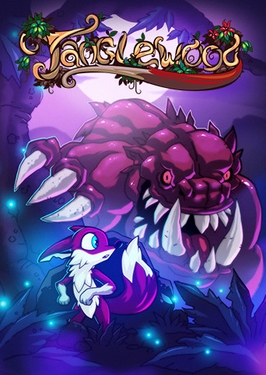
I remember finishing Tanglewood and immediately heading online to state that this 2018 Sega Mega Drive game belongs alongside the greats. I stand by it.
The game from Big Evil Corporation is so well designed, especially with its pixel art. On first glance it would be easy to mistake it for a Sonic clone, or an attempt at another mascot platformer. But that’s not the case. It’s a platform puzzler.
Nymn, a creature that looks a lot like a fox (if I remember rightly it’s set on another planet), has to rescue Fuzzls by rolling them back to their nests much like balls of yarn. Once in the nest, the Fuzzls grant you a temporary power that can be used to solve more puzzles and save more Fuzzls.
There is no real combat in the game. The monsters are all part of the puzzle and can be trapped. The platforming elements share their DNA with those mascot platformers mentioned earlier, but the puzzles are more in line with something like Lemmings.
I find it truly astonishing that a system released over thirty‑five years ago is still capable of providing new games like this. It’s not a high‑score chase, or a platformer based on skill or speed. It is its own experience entirely. It reminded me of everything I loved about the Mega Drive era.
Coded by Matt Phillips in assembly language specifically for the Mega Drive, games like this are why the real gaming era will never die.
Tanglewood is available on most major platforms, Evercade and of course the Mega Drive
-
Aquaventure Atari’s Lost Treasure
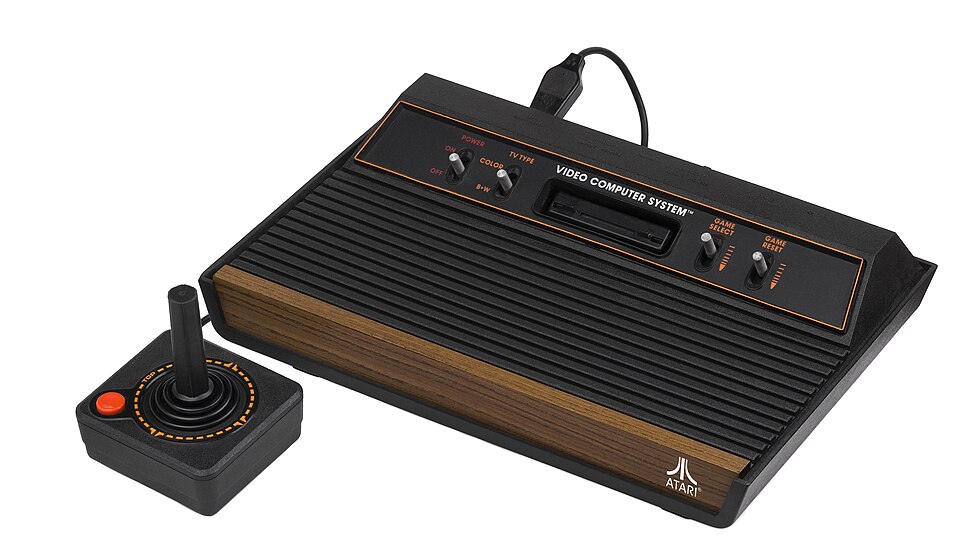
Remember that scuba‑diving game from 1983 on the Atari 2600? No? That’s because it wasn’t officially released until 2022 — though it did sneak onto a few official retro collections before that.
And as we’ll be covering, Atari is not dead in 2026.
So how does this underwater adventure play? Pretty well, actually. You dive down to collect points from the sea floor — a sea floor that keeps getting deeper — then race back to the surface within a set time limit. Rather than admire the fish, our scuba diver can shoot them for points.
There’s a catch, though. When you shoot the fish, they return faster, and if you collide with one, you lose a life. It’s a classic high‑score chaser.
So why wasn’t it released back then? Most likely it was a casualty of the Video Game Crash — an event that mostly affected the American market. Here in the UK, games continued to thrive as the home‑computer scene exploded with names like the ZX Spectrum and the Commodore. Machines that are also not dead in 2026. More on those as we press ahead.
So where does Aquaventure sit? Would it have set the world alight in 1983? Well… possibly not. But it would have been another addictive score‑chaser for the 2600, one with a refreshingly different setting too.
-
Down The Rabbit Hole..
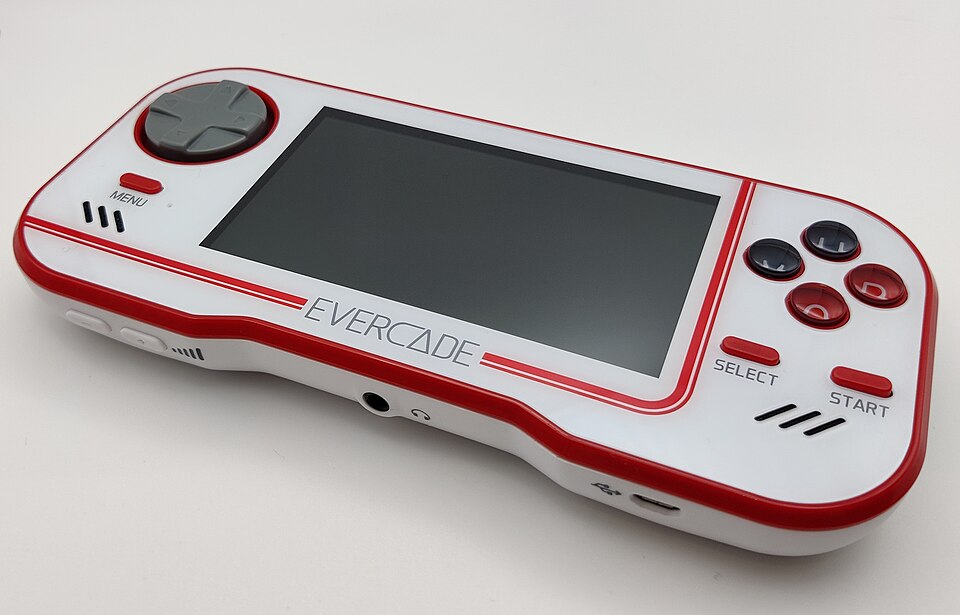
It started with the 2nd ever console I ever bought new: Blaze’s Evercade handheld.
I don’t buy much gaming‑wise that isn’t on sale digitally or reconditioned these days. What sold it to me as a must‑buy? The names on the front. That Atari logo, Pac‑Man was on there. It felt like this was a return of old friends.
Yes, I have played with RetroPie and those handhelds that store 1000s of games. But these were licensed cartridges too.
I know what you’re thinking here. Pac‑Man, Atari. This is just another Retro Reaction blog…
But it’s not. Because some of these Evercade games had modern release dates.
This opened up the rabbit hole for me. What if those consoles and computers we loved never went away?
What if, in some kind of parallel world, it is always nineteen‑eighty‑something and I’m going to go play my Atari, or NES, or Commodore?
Welcome to Neverending 80s.
Next time we look at a game created in 1983 but released in 2022 for the Atari 2600 — it’s Aquaventure.